co-designing diversity politics
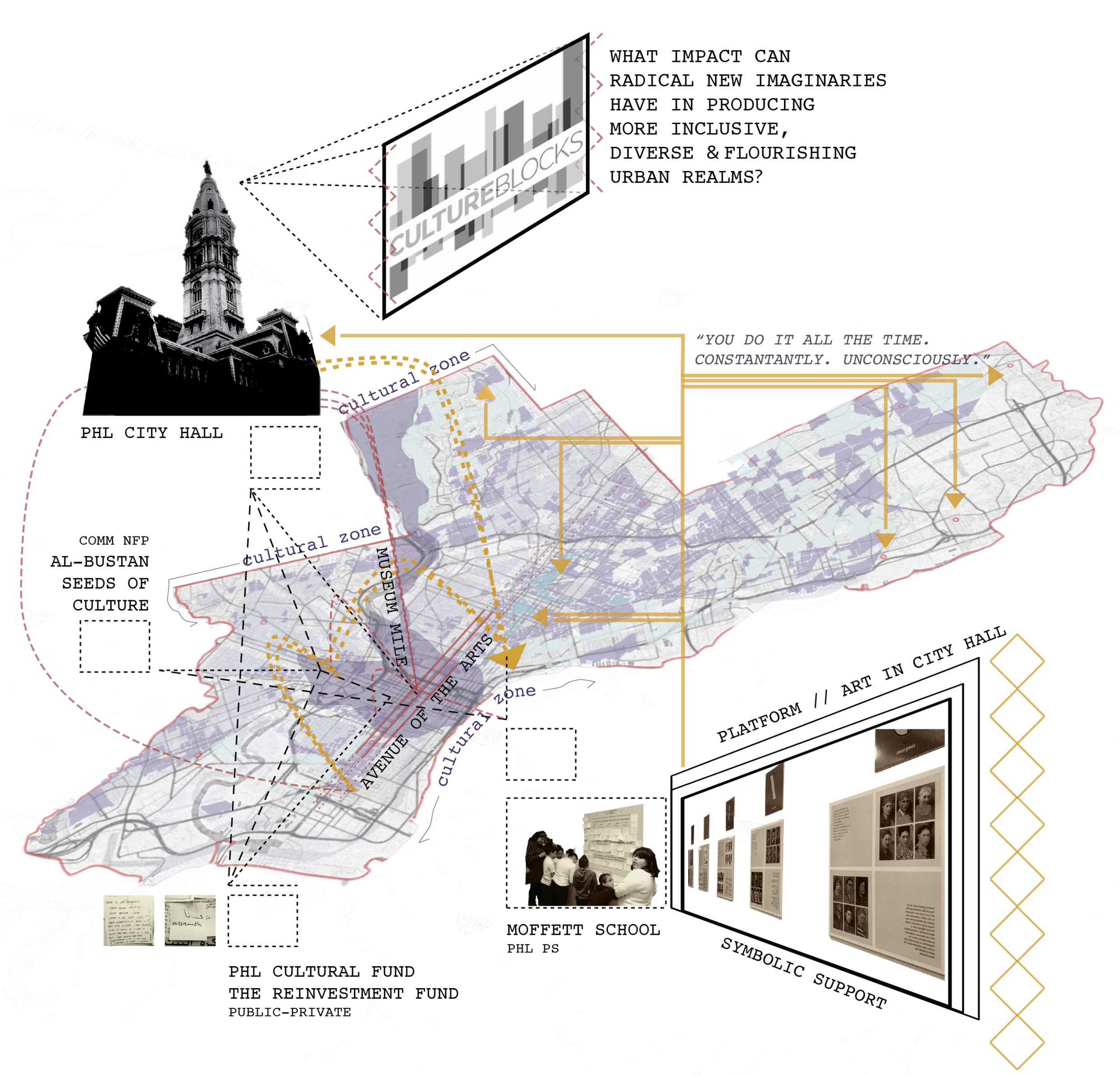
When thinking of cities as shaped by active engagement and lived experience, conversations involving multiple voices from multiple actors are possible. An important moment is when the formation of strategic alliances begins to manifest. If these alliances prioritize complex identity as a foundation for diversity and cultural initiatives, they will consciously move toward a practice of co-design using the urban imaginary as a vehicle for inclusivity of multiple voices and aspirations. The exhibit was a prototype of this. Recommendations stemming from the use of the urban imaginary as transformative urban practice might then form a pluralistic framework for arts and culture within urban governance in Philadelphia.
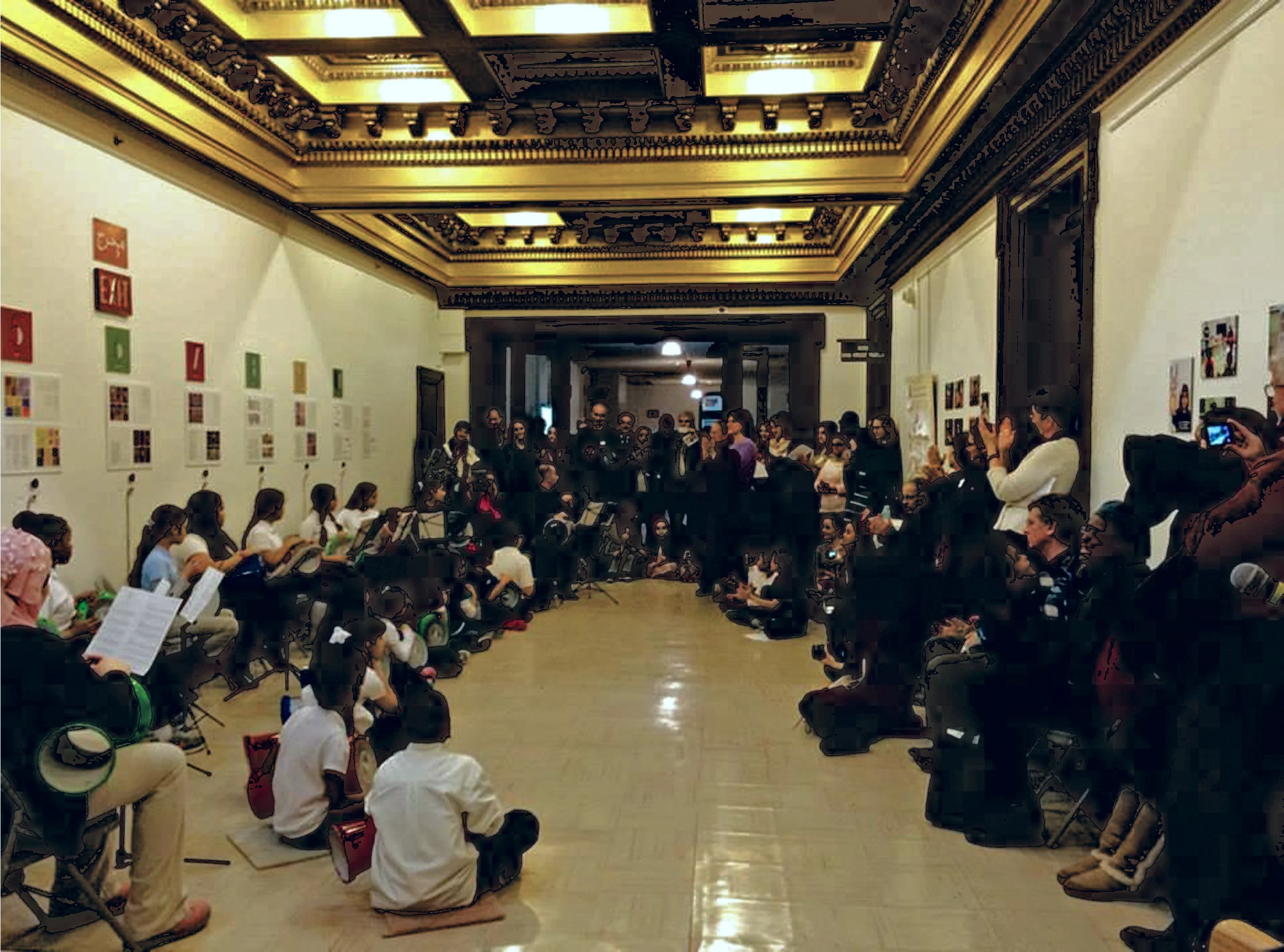
The collaborative team set out to design methods of engaging a wider audience in the internal co-production of alternative imaginaries and aimed to activate spaces of civic engagement through discourse in the public sphere. We looked to anchor institutions, public schools, art in public space programs, and applied for an opportunity to display work in City Hall through the OACCE Art in City Hall program. Al-Bustan was selected to curate an exhibition of original artwork to be on display in a fifth-floor corridor, in-between judges chambers, hearing rooms, City Council offices, and local government administration. This location is quite unique as an exhibition space and the project team discussed extensively what its contents and purpose should be in order to best utilize the symbolic power of a direct engagement with the urban imaginary inside City Hall. Ultimately, we saw this as a ripe occasion for exercising our theory as intervention within the paradigm of governmentality; we must determine how to most effectively design an exhibition that feels inclusive to multiple voices – local government employees, civil servants, visitors and guests, possibly even the Mayor. This remains a pivotal goal for producing pluralistic space of co-design within this City Hall corridor.
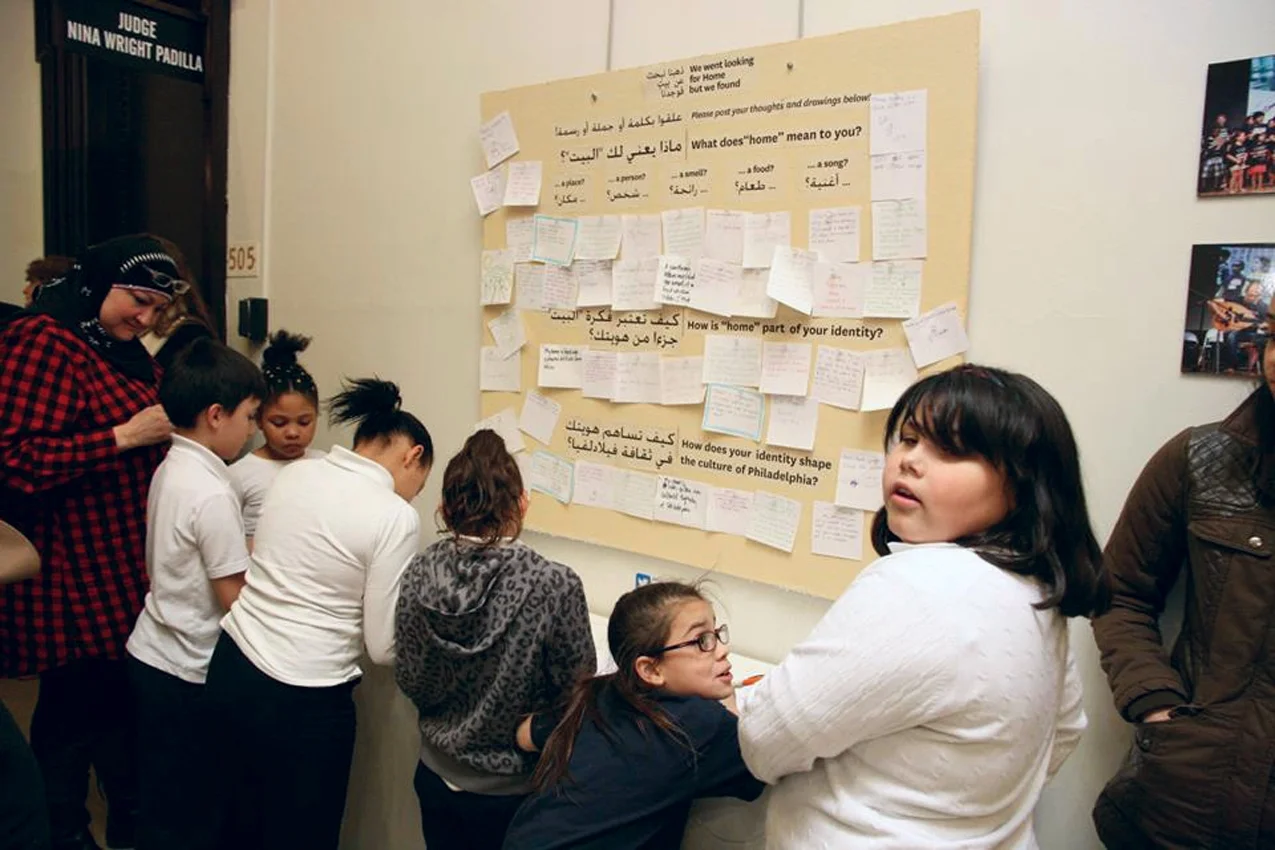
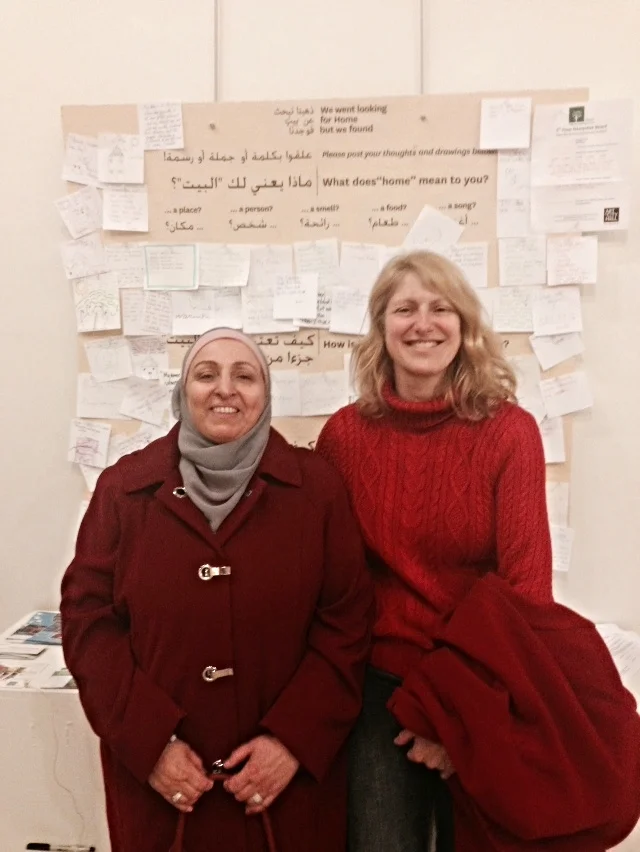
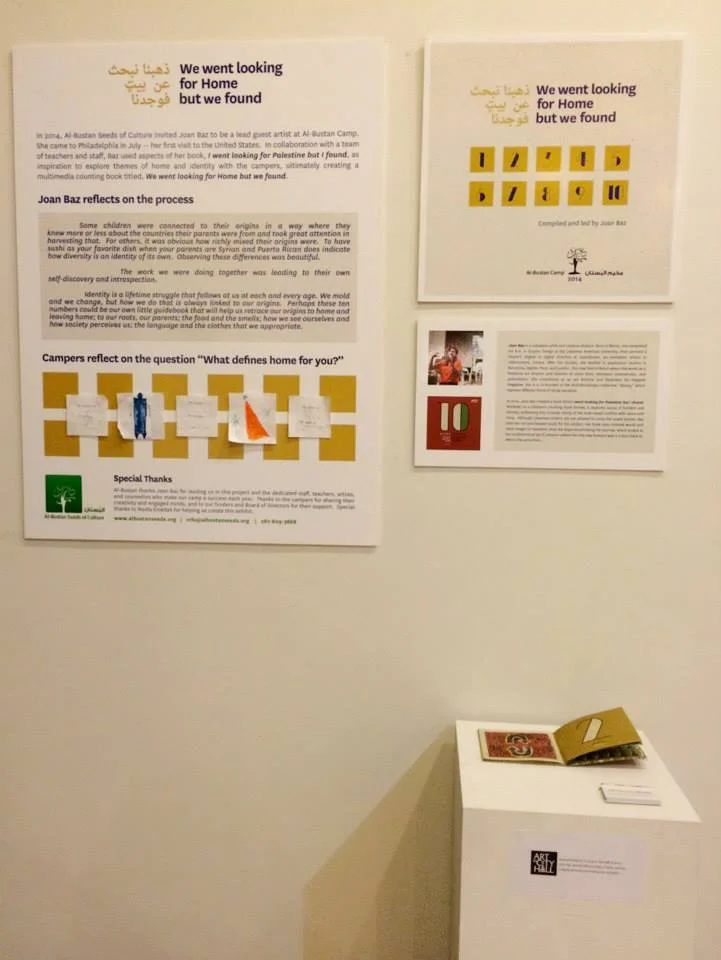
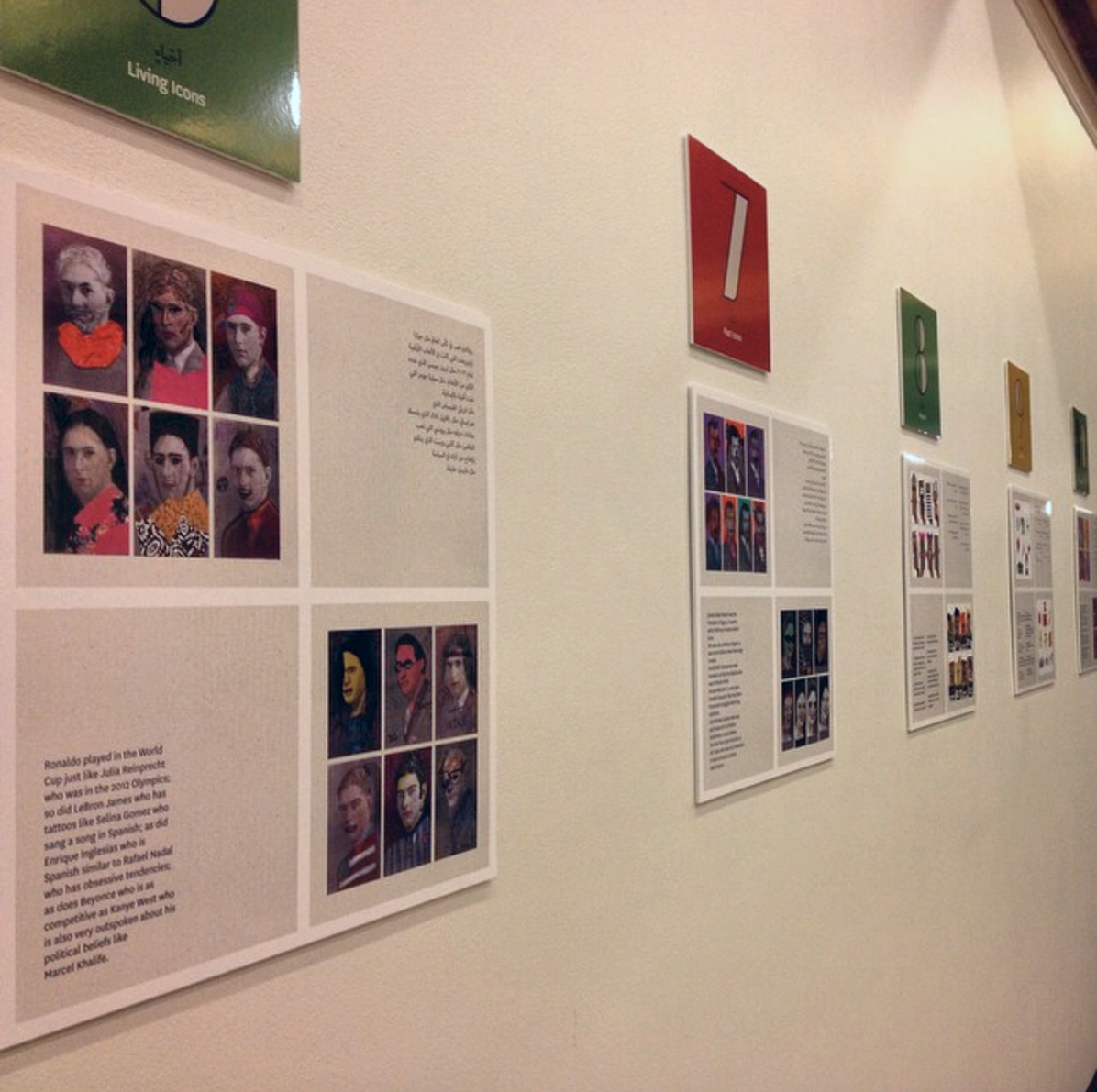
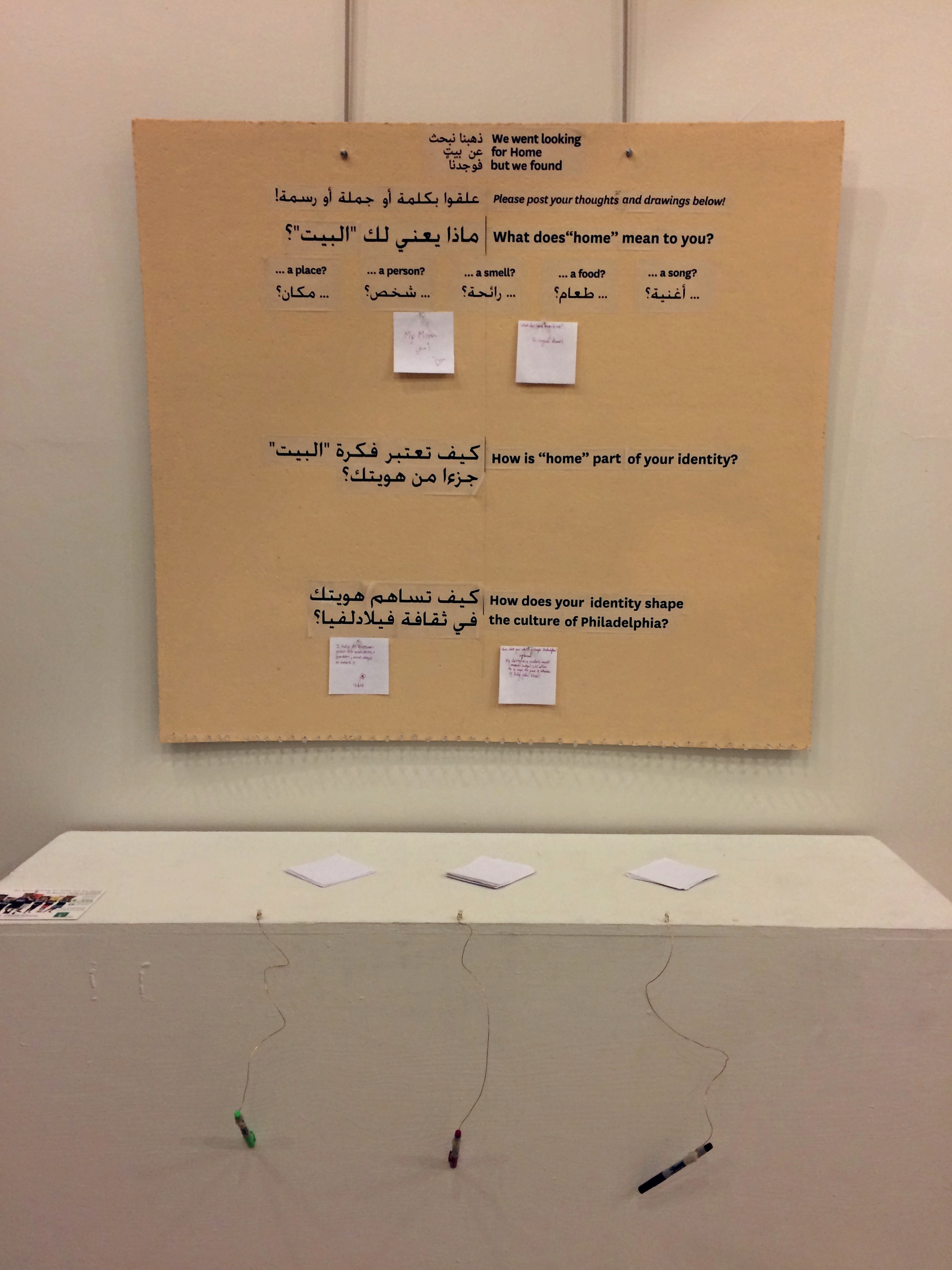
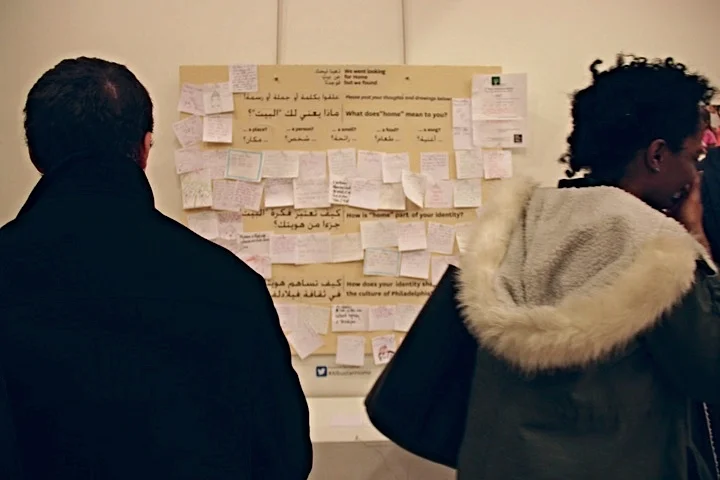
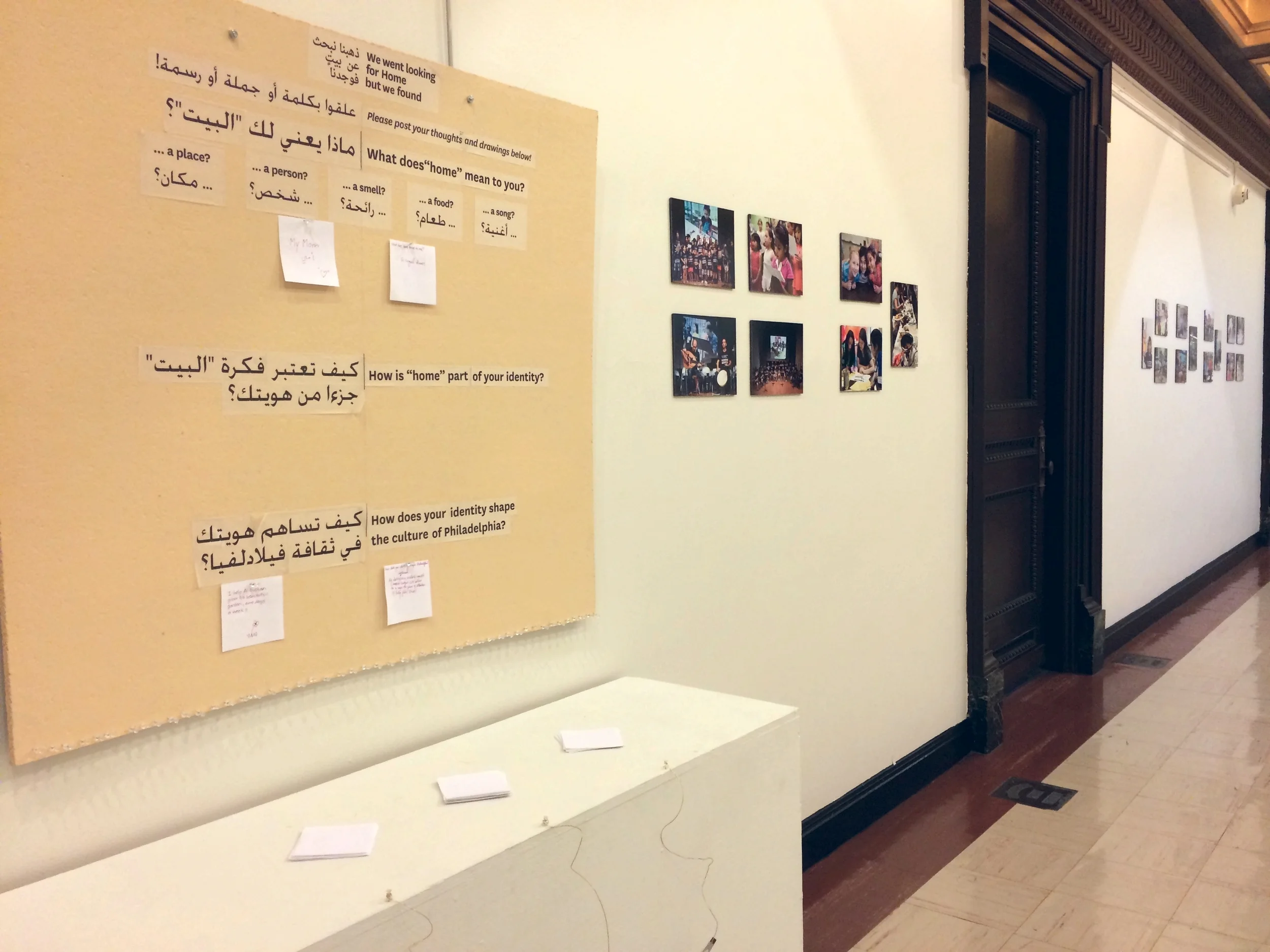
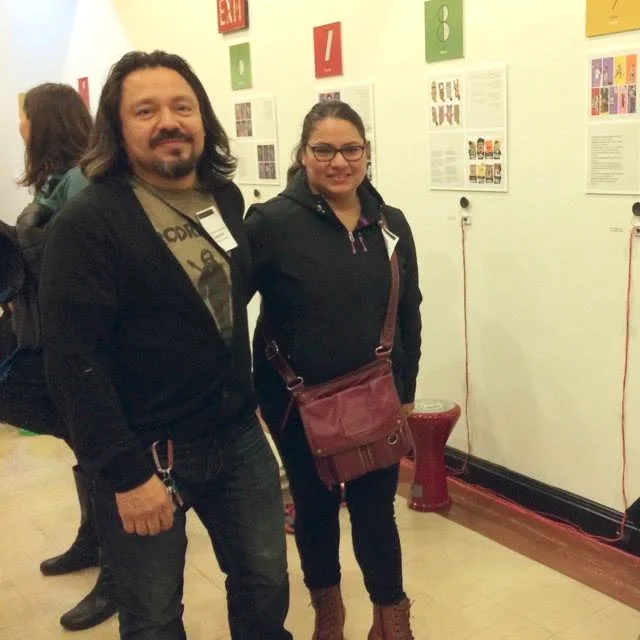
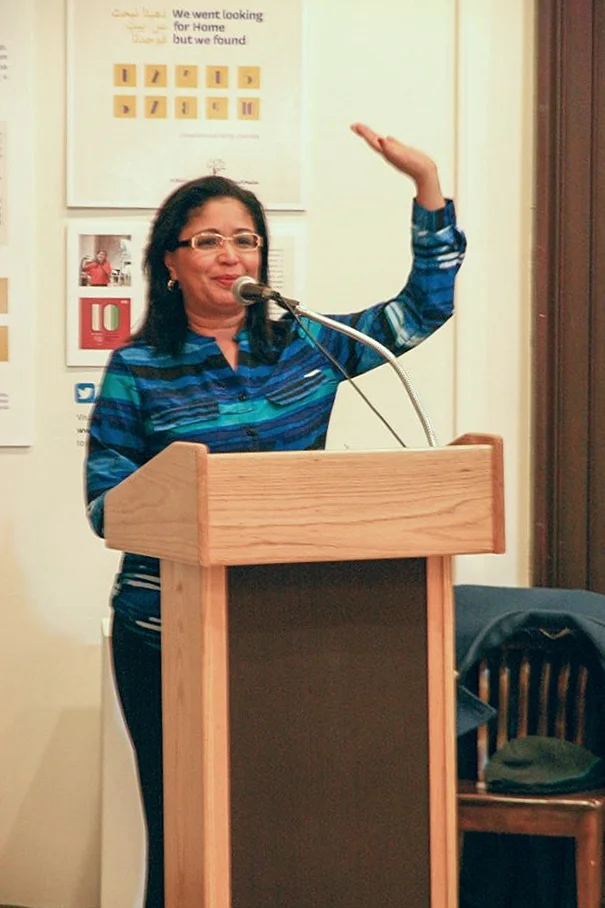
This opportunity manifested as the exhibition, “We Went Looking for Home but We Found,” which featured a recent collaborative, multimedia art display, taking the form of a simple counting book, that explores how home and identity shape and influence one another. This exhibit provided a platform upon which to share the collaborative workshop-style process inherent to Al-Bustan’s youth programs by presenting the final book pages along one wall while the facing wall displayed photographs of the making process. Throughout the planning stages, many ideas were exchanged, however, my primary influence was the creation of a new interactive dimension to “We Went Looking for Home but we Found” that would pose questions to the audience about their own identity and its relationship to the shaping of Philadelphia.
CO-DESIGNING SPACES OF PLURALITY
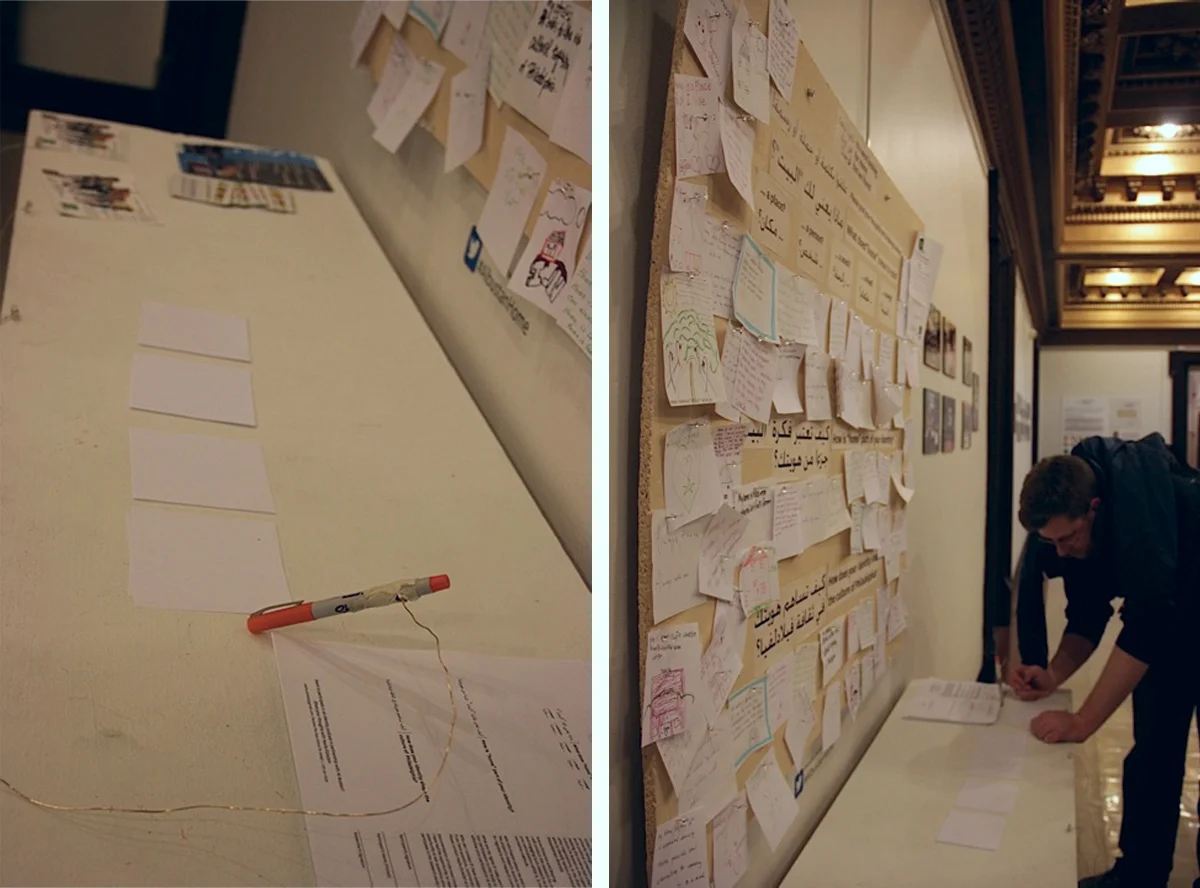
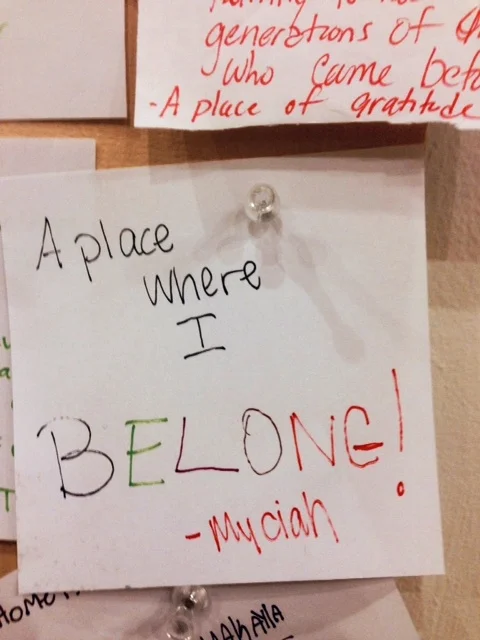
Collectively we decided to make an interactive board that have a series of questions visitors could respond to on provided paper squares to pin up for others to see. This was designed as such for two reasons. First, this process is imitable to the program design, which produced the counting boards on display. This process allows for the participant to sit with the question, ruminate as to what is the breadth of the question posed before committing to an answer to share. Secondly, this corridor will serve a distinctly different function from that of a common room for a large group working together for weeks at a time producing conditions of trust for meaningful discourse. Therefore, we designed a board that intends to provoke discourse, however delayed it might be. By doing so, participants could post an answer to a question and then return a few days later to see what other responses were generated; perhaps an individual felt an answer was powerful or provocative or amusing and replied in kind. Ultimately, the idea is focused toward multiple voices contributing to the discursive production of the space of the fifth floor corridor. This interactive element wants to discover what kind of environment could be produced with such a diverse cross-section of participants involved?
Reflecting upon the intent of this pilot practice, the complete process of curating this exhibition is quite informative to the initial aims of engaging the urban imaginary as an active form of practice. However, this process is equally unsuccessful in regard to the ambitious goal of co-designing a discursive space of pluralism.
ENGAGING PLURALISM
It is important to speak about the ways in which the exhibition, “We Went Looking for Home but We Found,” begins to craft a process of co-design – through the exercise of civic engagement in the public sphere. Bilfulco, citing Appadurai, discusses how capacity and voice act together in social spaces of co-design to promote the inclusion of multiple voices and multiple belongings, “It is through the exercise of voice (the capacity to debate, contest, inquire, and participate critically) that the sinews of aspiration as cultural capacity are built and strengthened, and conversely, it is through exercising the capacity to aspire that the exercise of voice … will be extended.” Habermas, Lefebvre, and Torre all indicate a discursive process is a necessary feature of the production of space within democratic practice. For Lefebvre discursive production of urban space is realized through material, human, and social infrastructures. Torre remarks with a similar sentiment, “public space… and its representation… is the product of the inextricable relationship between social action and physical space.”
This thesis asks of the exhibition, how can a discursive process from which a space of pluralism manifests be co-produced and co-designed, inclusive of disparate, complex, and fluctuating identities? Discursive co-production and in particular co-design, offers an actionable lens through which to understand theory as practice that can potentially illuminate the relationship between Madanipour’s empirical dichotomy, social exclusion and the city, and Said’s theoretical urban imaginary. To complete a final reflection of the exhibition as well as the experimental nature of actionable theory as a whole explored through this thesis, I offer a three-part summary. [1] Finding Pluralism in the Gaps; [2] Inclusion and Accountability; and [3] Actionable Theory in Found Spaces – A Proposal.